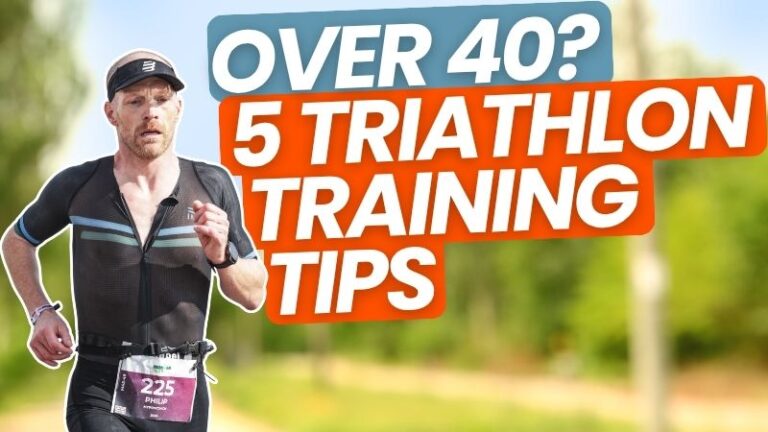
Are you over 40 and thinking about getting into triathlon, or already racing but want to get better with age? It’s never too late to become a fitter, faster, and smarter athlete. In fact, with the right training tweaks, your best performances might still be ahead of you.
Watch this post, or continue scrolling to read it.
After coaching thousands of athletes (including myself!) through their 40s and beyond, I’ve found five core strategies that make all the difference. Whether you’re aiming for your first sprint triathlon or a new personal best at IRONMAN 70.3, these are the tricks you need to know.
1. Add Interval Training to Slow the Effects of Aging
As we get older, our VO2 max naturally declines—that’s your body’s ability to use oxygen during exercise. But research shows that regular high-intensity interval training (HIIT) can help maintain or even improve this key performance metric.
- Include one high-intensity session per week for each discipline: swimming, cycling, and running.
- Keep the efforts short and sharp (e.g., 6 x 1-minute fast intervals with recovery).
- Listen to your body—quality over quantity is crucial.
Interval sessions aren’t just for young guns. They help maintain your edge and give your training structure a serious boost.
2. Prioritise Strength Training to Combat Muscle Loss
After age 35, muscle mass begins to decline. The solution? Consistent strength and conditioning.
- Start with bodyweight exercises (squats, push-ups, planks) 2x per week.
- Gradually increase resistance over time using weights or resistance bands.
- Avoid intense runs right after leg strength work to reduce injury risk.
Building strength improves endurance, power, and injury resistance—making it a non-negotiable part of triathlon training after 40.
3. Dial in Nutrition, Sleep, and Body Composition
You don’t need to gain fat just because you’re aging. With the right habits, you can stay lean, strong, and energised year-round.
- Cut back on sugary snacks and alcohol—especially during key training blocks.
- Eat balanced meals rich in protein and vegetables.
- Improve sleep quality by avoiding caffeine 8+ hours before bed and sleeping in a cool, dark room.
Bonus tip: when you sleep well, your cravings for junk food go down. It’s a win-win for performance and health.
4. Be Consistent—Avoid Long Gaps in Training
One of the most important (and overlooked) factors in improving after 40 is consistency. As we age, we de-train faster and take longer to bounce back from time off.
- Stick to a regular routine—even if that means shorter sessions.
- Include an easy “recovery week” every third week (about 50% of usual volume).
- Avoid big spikes in training volume—limit increases to 5–10% per month.
Remember, steady progress beats boom-and-bust cycles. Train smart and keep showing up.
5. Maximise Efficiency to Offset Age-Related Declines
While VO2 max and sprint speed decline with age, efficiency drops far more slowly. And this matters—a lot.
Take Tommy Hughes, a 59-year-old who ran a 2:27 marathon and outpaced his son. How? He could maintain a higher percentage of his VO2 max over time. That’s what efficiency looks like.
To improve your efficiency:
- Train at race pace regularly to get better at holding it.
- Include “tempo” or “race simulation” sessions in all three disciplines.
- Fuel properly during longer efforts to teach your body to perform efficiently when fatigued.
Being able to hold race pace longer—even if it’s slower than your younger competitors—is how you win as a masters athlete.
Final Thoughts: Yes, You Can Get Faster After 40
So there you have it: the five tricks that can help you improve and enjoy triathlon training well into your 40s and beyond:
- Include interval training.
- Maintain your strength.
- Dial in your nutrition and sleep.
- Stay consistent year-round.
- Focus on efficiency, not just raw speed.
Age is just a number—especially when you train smart. If you’re looking for a triathlon training plan designed specifically for athletes over 40, I’ve got you covered.