Most Ironman 70.3 races do not fall apart because of one obvious mistake. They come undone through a string of smaller decisions made in the weeks before, and in the hours during, the race itself.
I am Phil Mosley, and after more than 20 years of coaching triathletes, I have watched fit, well-prepared athletes lose time to problems they could have rehearsed. Here are ten of the most common ones, covering pacing, open water, heat, sunburn, hydration, fuelling, bike position, chafing and two truths that catch people out well before race day, along with what to practise so the day feels familiar rather than a gamble.
Key takeaways
- Most Ironman 70.3 races are lost through a series of small decisions before and during the race, not one dramatic error.
- Experienced athletes ride the 70.3 bike leg at roughly 78 to 85% of FTP. First-timers are safer at 70 to 78%.
- A workable fuelling target is 60 to 90 g of carbohydrate per hour, with about 400 to 800 ml of fluid and 400 to 800 mg of sodium per hour, adjusted for heat and sweat rate.
- An aero position only helps if you can hold it comfortably for the whole ride, so set it in training rather than on race day.
- Six purposeful sessions a week is enough for many age-group athletes. Fitness comes from absorbing training, not surviving extra sessions.
1 – Pacing decides your race more than fitness does
An Ironman 70.3 is 113 km (70.3 miles) of near-continuous effort. For the fastest amateurs it takes around four hours, for a mid-pack athlete closer to six, and for those further back in the field around eight hours or more. The swim, bike and run are one connected effort, and the mistake many athletes make is treating each discipline as though it stands alone.
The bike is where your judgement matters most, and where you can do the most damage without noticing. You feel fine early on, especially when you are excited, surrounded by other riders on closed roads and seeing strong numbers on your computer. Push too hard over the 90 km (56 mile) bike leg, though, and the half marathon becomes a damage-limitation job. When I first raced 70.3, I suffered towards the end of every bike and struggled on the run, and I decided the distance simply did not suit me. It was only when I learned to ride less aggressively that I started posting faster splits and eventually winning my age group. It felt like a revelation at the time, even though it sounds obvious now.
As a rough guide, experienced athletes ride the bike leg at about 78 to 85% of FTP, your best sustainable one-hour power. If you are newer, or less confident on the bike or run, aim closer to 70 to 78%. You can test this in training with a long ride at your planned race effort followed by a 5 to 10 km (3 to 6 mile) run. If that run feels like survival, your bike pacing is too ambitious and needs a rethink. Our guide on how to pace an Ironman bike goes into more detail.
2 – The swim rewards preparation, not just fitness
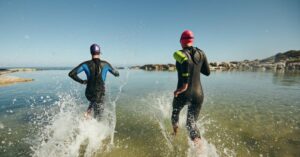
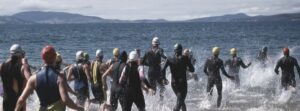
For many athletes the swim is the most stressful part of the day. There are bodies all around you, cold water, waves, reduced visibility, race nerves and the sense that once you start you cannot simply stand up at the end of a length. Most 70.3 races now use a rolling start, which helps, because you seed yourself with athletes of similar ability and your race begins when you cross the timing mat. That reduces the chaos of everyone starting together, but it does not remove the need to prepare.
The most useful thing you can do is practise open water swimming beforehand, ideally in conditions close to race day. Even 10 to 15 minutes in the water the day before helps, and a swim warm-up on race morning is valuable too. If the event allows it, get in 15 to 20 minutes before the start and swim a few easy minutes. If that is not possible, at least splash water over your face and down the front and back of your wetsuit, which helps you get used to the first shock of cold water that can trigger fast, shallow breathing. Once you start, keep the opening minute controlled and focus on long exhalations into the water. If you do not breathe out properly, carbon dioxide builds up and creates the feeling that you cannot get enough air in. Practise in open water, warm up when you can, start calmly and exhale fully, and you really reduce the chance of a panicky swim.
3 – Heat builds through the race, so prepare for it
Most 70.3 races start early, often between 6 and 8am when the air is cooler, and that can give you a false sense of security. You might feel fine on the swim and early on the bike, but as the day warms the heat usually hits hardest on the run. By then your core temperature has been climbing for hours and your pace feels much harder than it did in training.
If you already live in a warm climate you have an advantage. If not, heat acclimation helps, and it simply means giving your body repeated, manageable exposure to warmer conditions before race day. A practical approach is to spend the 10 to 14 days before the race adding some controlled heat exposure, such as low-intensity training in slightly warmer clothing, an indoor trainer in a warmer room, or a hot bath after an easy session. I would not deliberately overheat during hard intervals, because then the heat becomes another stress that lowers the quality of the workout. I live in a cool climate, and I find acclimation lets me race pretty well up to about 27°C (81°F). Knowing that, I tend to avoid entering races likely to be hotter than that.
4 – Sunburn is a stress you can prevent
Sunburn is not just uncomfortable. It is another stress your body has to manage while it is already working hard. If you are racing for four to eight hours in warm conditions, especially with fair skin, sunscreen is not optional. The difficulty is that many products do not last the full duration once you combine swimming and sweating, so you can apply sunscreen and still burn badly. When you are already asking your body to swim 1.9 km (1.2 miles), ride 90 km (56 miles) and run 21.1 km (13.1 miles), burning skin is not something you want to add to the workload. I use a long-lasting SPF 50 sun oil that holds up well over full-distance races, but there are plenty of good products. Whatever you choose, test it in long training sessions first so you know it works.
5 – Hydration works best with a plan
Dehydration can wreck your race. Lose too much fluid and your heart rate rises, your perceived effort climbs, your stomach slows and your run pace can collapse. Drinking too much carries its own risk. Taking in a lot of plain water without enough sodium can dilute your blood sodium, a condition called hyponatremia, which leaves you lightheaded or unwell. The aim is a sensible plan rather than forcing down as much fluid as possible.
For many athletes a starting point is around 400 to 800 ml of fluid per hour on the bike, depending on sweat rate, heat, body size and intensity. Sodium needs vary, but many athletes land around 400 to 800 mg per hour, sometimes higher for salty sweaters in hot conditions. In practice you might get there with a sports drink containing sodium, electrolyte tablets in your bottles, or salt capsules taken at intervals with water. The simplest method is to check the sodium content of your drink mix, gels and chews, work out roughly how much you will take per hour, and only add tablets or capsules if you need them. Practise this before race day, because suddenly combining a high-sodium drink, salt capsules and unfamiliar on-course products can upset your stomach.
6 – You cannot race well for hours on water alone
If you do not take in enough carbohydrate you run out of energy. Take in too much and you get stomach trouble, so it is a balance. During a 70.3 you might burn roughly 3,500 to 5,000 calories, about two normal days of food, and a large share of that comes from glycogen, your stored carbohydrate. You cannot replace everything you burn, but you can replace enough to delay the point where your energy drops off a cliff.
A good general target is 60 to 90 g of carbohydrate per hour, mostly on the bike where eating and drinking is easier than on the run. If a gel holds about 25 g, then 60 to 75 g an hour is roughly two to three gels, or the same from drink, chews, bars or real food. Some athletes tolerate more than 90 g an hour, especially with products that mix carbohydrate types, but that takes practice. The gut is trainable, so if you build your fuelling gradually on long rides and brick sessions you can usually handle more, more comfortably. Aim to know your plan so well that by race morning it is almost boring: what you are taking, when, how much fluid goes with it, and how your stomach responds at race effort. Our Ironman nutrition plan covers how to build that routine.
7 – An aero position only helps if you can hold it
I once raced a 70.3 where my neck got so sore on the bike that it still hurt three months later. I had been for an aero bike-fitting session, and the position I ended up with would have been fine for a short time trial but was wrong for 90 km (56 miles) of Ironman 70.3. In the second half of the ride I was sitting up, stretching my neck and shifting around just to get through it, so by then I was not aerodynamic at all. I had a position that looked fast but that I could not actually ride.
This is a common mistake. Athletes chase an aggressive position to cut drag, but a 70.3 asks you to stay efficient for two, three or four hours and then run a half marathon, which is a very different demand from holding an aero tuck for 20 minutes. Discomfort also carries a mental cost, because any pain during a long race registers in your brain as a reason to slow down. Aerodynamics still matter, so the goal is the most aerodynamic position you can comfortably hold during long training rides, on similar terrain, at similar intensity, while eating and drinking as planned. If you cannot hold it in training, you will not hold it on race day.
8 – Chafing can end a race, so lubricate early
I have seen and felt some horrible skin damage at Ironman events. There is a lot of rubbing in a triathlon, from your wetsuit to your trisuit to your saddle to your shoes, and against your own skin. It sounds minor and can become a major problem. A small rub at mile two of the run can be very painful by mile ten, and in some cases skin damage is enough to stop someone finishing. Use a lubricant that lasts for several hours and apply it to every part that interacts with your kit or itself. I have used Vaseline in the past and found it does not last long, whereas Body Glide holds up better. There are plenty of good products, so pick one that works for you and test it before race day. The rule is simple: if in doubt, lubricate it.
9 – Your first Ironman 70.3 is information, not a verdict
Your first 70.3 is unlikely to be perfect, and that does not mean it cannot go well. These events are complicated. You have equipment choices, travel, accommodation, race registration, bike-racking, weather, swim conditions, pacing, nutrition, hydration, transitions, kit decisions and the emotional load of the whole thing. Most athletes only learn how they personally respond to all of it by racing more than once. After nine years away from long-course triathlon, and plenty of research before I came back, it still took me three or four 70.3 races to feel dialled in again, from equipment and travel to pacing and nutrition, and all the little details that only seem obvious once they have gone wrong. Prepare as well as you can, and treat a messy first race as information for next time rather than a failure.
10 – More training only helps if you can absorb it
More training is not automatically better, and this catches a lot of triathletes out before race day. People assume that because a 70.3 is a serious event, the safest route is to keep adding sessions. Training only works if you can absorb it. Arrive carrying months of fatigue and your fitness is blunted by tired legs, poor sleep, low motivation and a body that has not fully recovered. For many busy age-group athletes, six purposeful sessions a week is plenty, often two swims, two bikes and two runs, with one or two short strength sessions to back them up if they fit. A structured plan removes much of the guesswork. Our Ironman 70.3 plans are built around progressive training, sensible recovery and sessions that fit around real life, and they come with email coach support when you need it. The bigger point holds whether you follow a plan or build your own: consistent, absorbed training is what raises your fitness, and surviving extra sessions is not.
Frequently asked questions
Ride at about 78 to 85% of your FTP if you are experienced, and closer to 70 to 78% if it is your first race or the bike is not your strength. FTP is your best sustainable one-hour power. The bike is where most athletes overcook their pacing, so err on the conservative side and test it in training with a long ride at race effort followed by a short run off the bike.
Aim for about 60 to 90 g of carbohydrate per hour, taken mostly on the bike where eating is easier. If a gel contains roughly 25 g, that is two to three gels an hour or the same from drink, chews, bars or real food. Practise it on long rides and brick sessions, because the gut adapts with training and race day should feel routine.
Practise open water swimming before the race in conditions close to race day, warm up beforehand if the event allows it, and start calmly with long exhalations into the water. Breathing out fully stops carbon dioxide building up, which is what creates the feeling of not getting enough air. If you cannot warm up, splash water on your face and inside your wetsuit first to blunt the cold shock.
For many busy age-group athletes, six purposeful sessions a week is plenty, often two swims, two bikes and two runs, plus a short strength session or two if they fit. More is not automatically better. You get fitter by absorbing the right sessions consistently, so a plan that manages recovery usually beats simply adding volume.
Yes, and it is worth expecting. A 70.3 has many moving parts, from equipment and travel to pacing, fuelling and transitions, and most athletes only learn how they respond by racing more than once. Prepare as well as you can, then treat a messy first race as useful information for next time rather than a failure.